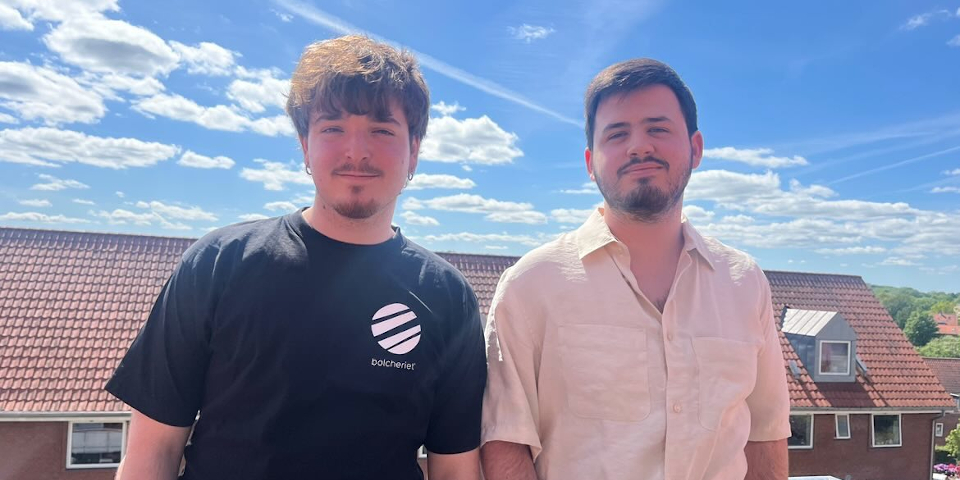
Dario Montes (21) and Mario Cuellar (23) both come from southern Spain, from towns near Seville. As classmates and former roommates, they have built not only a close friendship, but also a shared ambition to explore the creative possibilities of software engineering.
“We’ve known each other for a long time, and living together made it really easy for us to collaborate,” they explain. “We trust each other’s ideas, and that’s important when working on a project like this.”
Creating a modular magic system
For their bachelor’s project, Dario and Mario are developing a modification (mod) for the popular game Minecraft. In software terms, a mod is a user-created extension that adds new features, improves functionality, or changes how a game works.
Behind the creative concept lies a significant software engineering challenge. The students are designing a modular and extensible system that allows complex spell behaviour to emerge from combinations of smaller independent components.
“Our idea was to create something more dynamic than typical game mechanics,” they explain.
They are building a modular spell system that allows players to design their own spells from scratch.
“Instead of using predefined abilities, players can combine individual components to create completely unique spells,” they say. “That’s what makes the system interesting – it gives players creative freedom.”
Each spell is built from smaller components that can be arranged in different ways, resulting in a wide range of effects and nearly endless combinations. Some components define effects, while others modify or control how the spell behaves during execution.
The project also involves designing an underlying execution system capable of handling dependencies, interactions, and real-time performance inside the game environment.
“We wanted the player to feel like they are actually designing their own magic,” they add.
Turning theory into practice
The project reflects the hands-on approach of the Software Technology Engineering programme at VIA, where students work with real development challenges.
“We’re applying what we learn in class directly to the project,” they explain. “It’s not just theory – we’re designing systems, solving problems, and building something that actually works.”
Throughout the process, they are supported by a supervisor who helps guide the project and ensures it develops according to plan.
“We’ve only just started working closely with our supervisor, but we know their feedback will be really valuable as we move forward,” they say.
From student project to real users
Looking ahead, Dario and Mario already see potential beyond the classroom.
“If we’re happy with the result, we’d love to publish the mod so other people can play it,” they say. “And if the community likes it, we would definitely consider expanding it further.”